Crowdfunding has become a lifeline for cultivated meat companies, especially as venture capital investments in the sector have significantly dropped (by 75% in 2023). This funding method allows everyday people to contribute small amounts, starting as low as £10, to support companies working on lab-grown meat. Platforms like Crowdcube and Koodoo play a key role by connecting investors with companies, managing transactions, and ensuring legal compliance.
Key Points:
- Crowdfunding helps fund research, regulatory approvals, and production scaling.
- It builds a community of supporters who back the vision of cultivated meat through public campaigns.
- Investors may receive equity, rewards, or both, depending on the campaign type.
- Risks include potential loss of investment and lack of liquidity.
Real Examples:
- Mosa Meat raised over €3 million in 2025, surpassing its €1.5 million goal in just 24 minutes.
- Cellular Agriculture used crowdfunding to scale bioreactor technology and build a pilot plant.
Crowdfunding not only provides funding but also signals strong consumer interest, which can influence regulators and larger investors. Whether you're looking to invest or support the movement, it's a direct way to contribute to the future of cultivated meat.
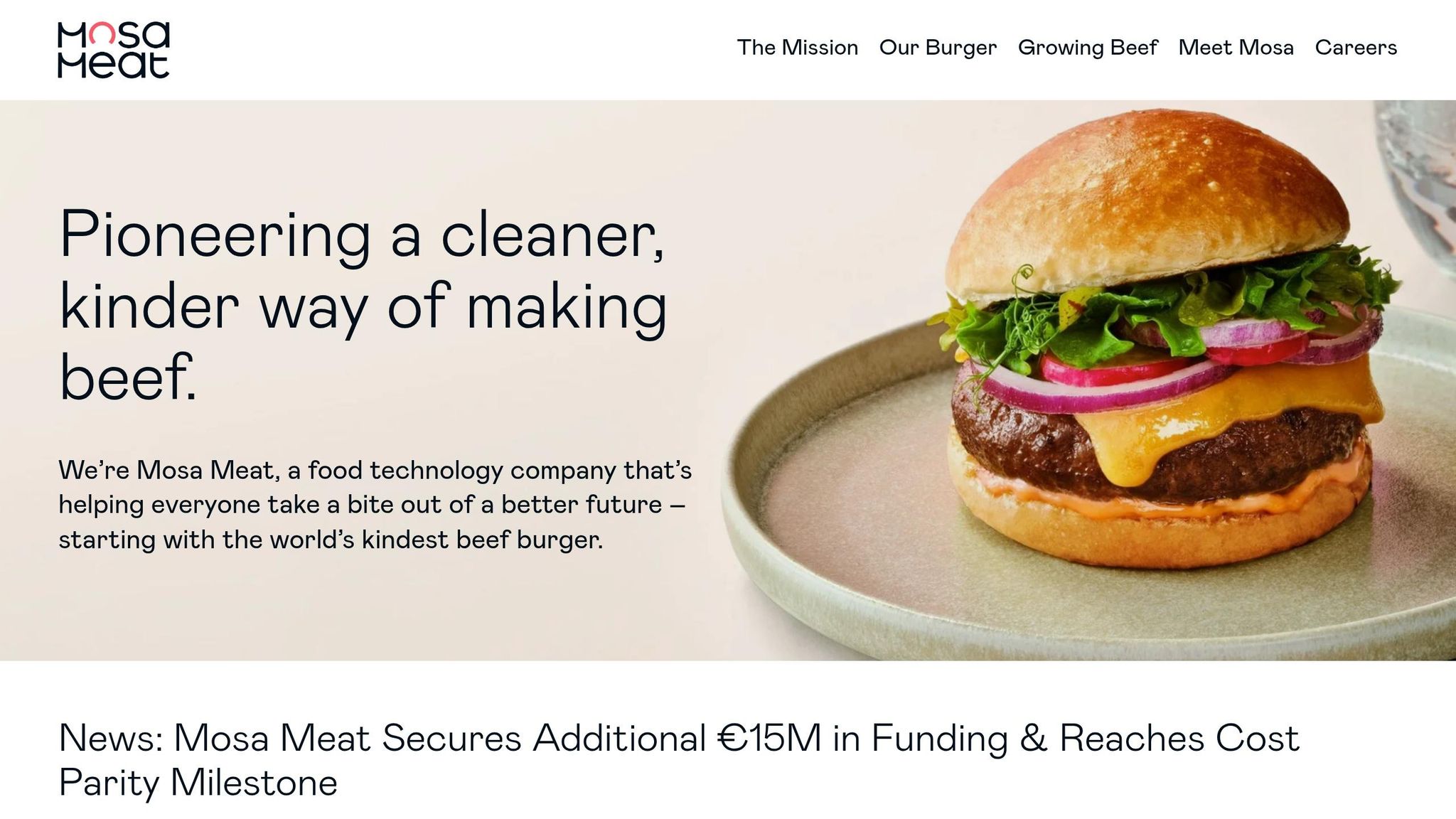
Mosa Meat Launches Crowdfunding Campaign
sbb-itb-c323ed3
How Crowdfunding Works
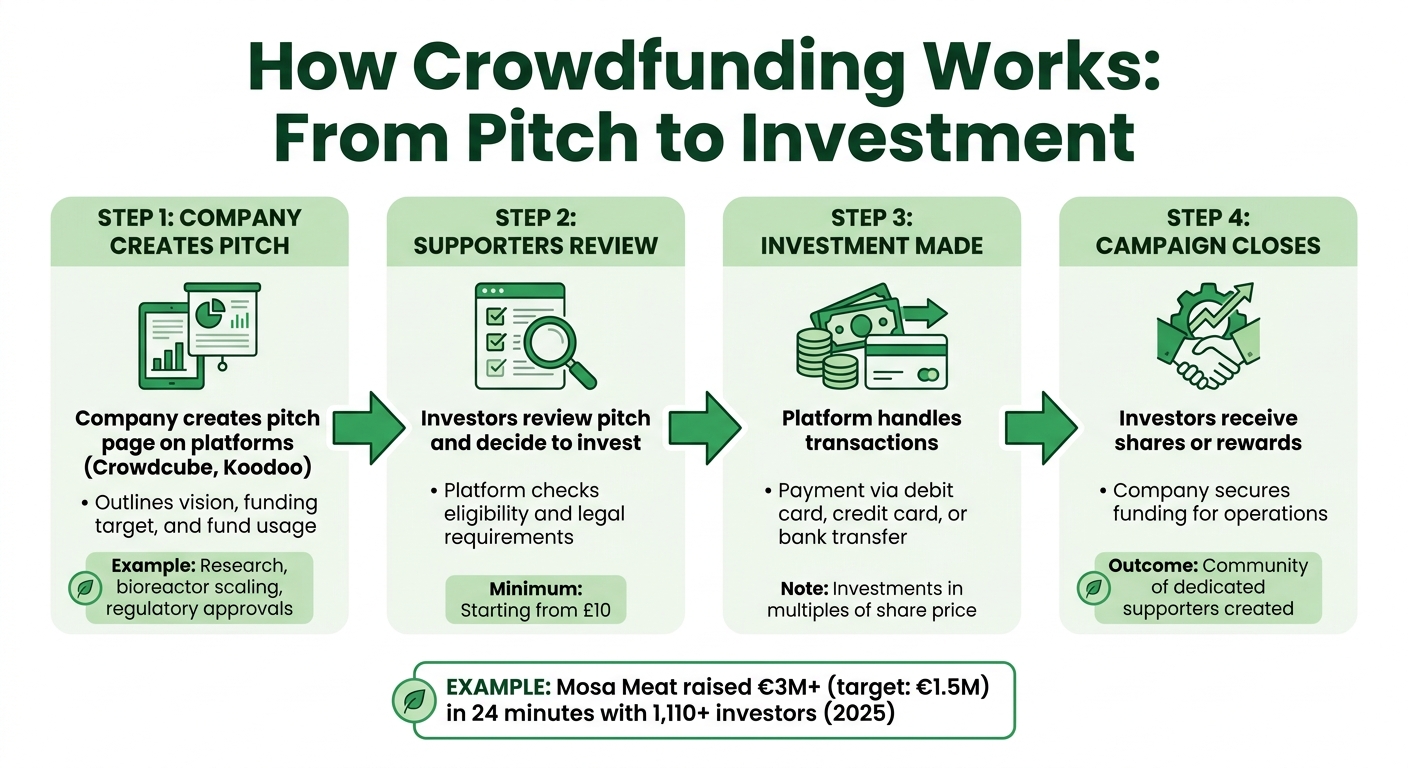
How Crowdfunding Works for Cultivated Meat: 4-Step Investment Process
Crowdfunding is a way to raise money by gathering small contributions from a large number of people through online platforms [5]. Instead of relying on a single venture capital firm for millions, a Cultivated Meat company can collect investments from hundreds or even thousands of supporters, with contributions starting as low as £10. This approach allows everyday people to invest in companies they believe in, offering the potential for financial returns if the business succeeds.
Here’s how it works: A company creates a pitch page on platforms like Crowdcube or Koodoo, outlining its vision, the amount of funding needed, and how the funds will be used. Supporters review the pitch and decide whether to invest. The platform handles the transactions, checks investors' eligibility, and ensures all legal requirements are met [5]. This model not only provides essential funding for Cultivated Meat companies but also nurtures a community of dedicated supporters. Once the campaign closes, investors receive either shares or rewards, while the company secures the funds it needs.
For Cultivated Meat companies, the money raised often goes toward research and development, scaling up bioreactor production, and navigating regulatory hurdles [1][2]. For example, in December 2019, UK-based Cellular Agriculture launched a campaign on Koodoo, aiming to raise £500,000 to scale its bioreactor technology and build a pilot plant by the end of 2021. CEO Illtud Dunsford shared the company’s vision:
"Our challenge is to deliver an enabling technology at scale that can create a much bigger industry within cultured meat and ensure price parity with what we consider traditional meat products." [3]
Types of Crowdfunding
There are three main types of crowdfunding, each offering distinct advantages to supporters:
- Equity crowdfunding: This is the most common method for Cultivated Meat companies. Investors buy shares in the business, hoping for long-term returns if the company grows or is acquired. This model is especially suited for biotech startups, as it provides the large amounts of capital needed for research and scaling. Investments can start from as little as £10 and are often made in multiples of the company’s set share price [5].
- Reward-based crowdfunding: Supporters receive non-financial perks, such as exclusive merchandise or early access to products, in exchange for their contributions. Some Cultivated Meat campaigns combine this with equity crowdfunding, offering both shares and special benefits to build brand loyalty even before products hit the market.
- Donation-based crowdfunding: This type, where contributions are purely philanthropic, is rarely used by for-profit biotech startups in the Cultivated Meat sector.
By offering diverse options, crowdfunding campaigns can attract a broader range of supporters. Beyond funding models, the platforms themselves play a crucial role in aligning campaigns with investor preferences.
The Role of Platforms
Platforms like Crowdcube and Koodoo connect businesses with potential investors by hosting pitch pages, managing technical aspects of investment, and ensuring legal compliance [5].
Some platforms, such as Koodoo, focus on sustainability and have rigorous selection criteria. Companies must demonstrate a positive impact on people or the planet and adhere to standards like the UN’s guiding principles on business and human rights [3]. Michael Wilkinson, CEO of Koodoo, highlighted the shift in investor priorities:
"Consumers, particularly younger generations, expect businesses to be driven in some other direction than simply making a profit. They increasingly back their beliefs with their shopping habits as well as investments." [3]
Platforms also offer features like a "private phase", where pre-registered supporters can invest before the campaign opens to the public [5]. In the UK, they assist investors with tax relief schemes like the Enterprise Investment Scheme (EIS), making early-stage investments more appealing. These measures not only simplify the investment process but also reflect the values of a community eager to support responsible and sustainable innovation in Cultivated Meat.
Why Crowdfunding Matters for Cultivated Meat Supporters
Crowdfunding plays a crucial role in the journey of Cultivated Meat, turning supporters into active contributors who help drive innovation and demonstrate clear market interest in this emerging field.
Funding New Companies in a Challenging Market
Cultivated Meat companies operate in a space that demands significant investment. From developing advanced bioreactor systems to navigating complex regulatory processes and scaling up production, the financial hurdles are steep. While venture capital and institutional funding cover major rounds, crowdfunding steps in to bridge the gap, often supporting the critical final stages before products become available to consumers.
Take the UK-based Cellular Agriculture, for example, which successfully crowdfunded to scale its technology. Similarly, Mosa Meat's February 2025 campaign raised an impressive €1.5 million in just 24 minutes, eventually surpassing €3 million with contributions from over 1,110 investors [4]. These examples highlight how public support can provide essential funding in a tough financial landscape.
But crowdfunding isn’t just about raising money - it’s also about building a strong, engaged community, as we’ll explore next.
Building a Community of Early Supporters
Crowdfunding does more than fund projects; it creates a network of passionate supporters united by a shared vision. These campaigns allow individuals - especially younger people who prioritise aligning investments with their values - to become active participants in the Cultivated Meat movement [3].
The rapid pace and enthusiasm of these campaigns send a powerful message to regulators, investors, and the broader food industry: consumer interest in Cultivated Meat is not only real but growing fast. When hundreds of investors rally behind a campaign in mere hours, it signals a robust community ready to back sustainable alternatives to traditional meat.
For those eager to see Cultivated Meat products hit the shelves sooner, crowdfunding offers a direct way to contribute to this progress. It also presents the potential for financial rewards if these companies succeed, making it a meaningful and impactful endeavour.
How to Participate in a Crowdfunding Campaign
Getting involved in a crowdfunding campaign is an exciting way to support the development of Cultivated Meat. By contributing, you're not only financing innovation but also becoming part of a community that’s helping to shape the future. Here’s a step-by-step guide to help you navigate the process - from discovering campaigns to staying updated on your investment.
Finding the Right Campaign
Start your search on well-known UK equity crowdfunding platforms like Crowdcube. Use search terms such as "cultivated meat" to find active campaigns. For early access, check the websites of specific Cultivated Meat companies and pre-register for their upcoming campaigns. Pre-registration often gives you access to a private phase before the public launch.
Make sure to complete any required questionnaires to understand the risks associated with investing in early-stage startups. Also, verify your eligibility, as some platforms may not allow participation from residents of countries like the United States, Canada, Japan, or Russia[5]. Once you’ve identified a campaign that interests you, review its details to ensure it aligns with your personal goals.
Evaluating the Investment
Before making a financial commitment, take the time to thoroughly examine the campaign's Pitch Page. Look for essential details such as the funding target, pre-money valuation, and the company’s plans for using the funds - whether it’s for research, regulatory approvals, or scaling up production.
If you’re in the UK, check if the campaign qualifies for EIS or SEIS tax relief, as this could provide tax benefits. Also, pay close attention to the company’s progress in securing regulatory approvals, as this can be a critical factor in their success[1][5].
Making a Contribution
Registering on crowdfunding platforms is usually a quick and straightforward process. Once registered, decide how much you want to invest. Many campaigns accept contributions starting at just £10, with investments often made in multiples of the share price[5]. Payments can typically be made via debit cards, credit cards, or bank transfers. Some campaigns may even offer special reward tiers, which could include perks like early access to products or invitations to exclusive events.
Tracking Your Contribution
After you’ve invested, keep an eye on the campaign’s progress. Most platforms provide regular updates, and companies often share key milestones through newsletters. These updates can include news on regulatory achievements or product launches, helping you stay informed about how your investment is making an impact[6].
Risks and Rewards of Crowdfunding
Crowdfunding gives you the chance to back Cultivated Meat companies while potentially seeing financial gains. But before diving in, it's crucial to weigh both the rewards and the risks, or consult our comprehensive guides for more context.
Potential Benefits
When you invest in a Cultivated Meat crowdfunding campaign, you’re essentially buying equity that could grow in value over time. The payoff usually comes from an "exit" event, like a stock market floatation (IPO), a buyout by a larger company, or a share buyback[5]. Take, for instance, the success of Mosa Meat’s campaign in early 2025 - an inspiring example of what’s possible.
On top of financial prospects, you’re contributing to environmental goals. Cultivated Meat production uses far less land and water and emits fewer greenhouse gases compared to traditional livestock farming[2]. For UK investors, there’s also the added perk of tax relief through schemes like the Enterprise Investment Scheme (EIS) or the Seed Enterprise Investment Scheme (SEIS), which can help offset the risks linked to early-stage ventures[5]. Still, it’s important to remember that these potential rewards come with significant risks.
Potential Risks
Investing in startups always carries the chance of losing your entire investment[5]. As The Ethical Butcher cautions:
Please be aware, investments of this nature carry risks to your capital
Another challenge is the lack of liquidity. Unlike public markets, crowdfunding investments don’t have an active secondary market, meaning you might not be able to sell your shares quickly. Your capital could be tied up for years until an exit event happens[5].
Additionally, regulatory hurdles and political resistance add layers of uncertainty. For example, countries like Italy and Hungary have pushed to ban novel foods, creating a challenging environment for such ventures[1][2]. It’s also worth noting that some campaigns exclude residents from certain countries, including the United States, Canada, Japan, and Russia, due to legal restrictions[2]. Always double-check your eligibility before investing.
Conclusion
Crowdfunding plays a key role in bringing cultivated meat from an idea to reality. By covering crucial expenses like the final stages of research, marketing efforts, and scaling up production, it bridges the financial gaps that traditional venture capital often leaves behind. Take Mosa Meat as an example - their campaign not only exceeded its target but also highlighted the strength of public backing.
Beyond funding, crowdfunding helps create a community of dedicated supporters who can influence regulatory approval. This combination of financial support and community engagement sets the stage for the industry's progress.
For those curious about cultivated meat, Cultivated Meat Shop serves as a go-to resource. It offers beginner-friendly guides, an interactive timeline for upcoming product launches, and regular updates on industry developments. Whether you're thinking about contributing to crowdfunding efforts or simply wondering when cultivated meat will hit UK shelves, this platform equips you with the knowledge to get involved.
FAQs
How do I know if I’m eligible to invest from the UK?
If you're based in the UK and interested in investing in cultivated meat, you might qualify, provided you comply with local investment regulations. It's crucial to assess factors such as the company's technology, potential for scaling up, and progress in navigating regulatory hurdles. While the UK government is working on establishing a regulatory framework, the exact eligibility criteria can differ depending on the investment platform or company. Make sure to review these requirements carefully before moving forward.
When can I sell my shares if I invest?
Shares in cultivated meat companies are generally not something you can sell straight away. Typically, they become sellable during an exit event like an acquisition or an initial public offering (IPO). In some cases, they might also be sold through secondary markets, but that depends on availability. The timing for these opportunities largely hinges on the company's fundraising plans and overall exit strategy.
What should I check before investing in a Cultivated Meat campaign?
Before diving into an investment, take a close look at the founding team’s background. Do they have strong experience in areas like bioprocessing, food sciences, and navigating regulatory landscapes? A skilled team can make all the difference.
Next, evaluate the technology they’re working with. This includes things like cell lines, serum-free media, and their approach to bioreactor design. These elements are crucial for efficient and effective production.
Don’t overlook their scalability plans. How do they plan to increase production capacity while keeping costs under control? A clear strategy here can signal a company’s potential to grow and succeed commercially.
Finally, dig into their environmental claims and regulatory progress. Are they transparent about the hurdles they face and how they plan to overcome them? These factors are essential for long-term success in this space.